

Your car’s paint looks dull. Or maybe you can see a web of fine scratches whenever sunlight hits the hood at the wrong angle. Either way, you’re wondering whether spending real money on a professional paint fix is actually going to be worth it, or whether you should just wax it yourself and call it a day. Honest answer? It depends, and the details matter a lot. If you’re a vehicle owner in Fresno weighing your options, getting Paint Correction in Fresno CA from a reputable shop is almost always going to outperform a quick wax job by a significant margin, but that doesn’t mean it’s the right call for every situation. Let’s break it all down.
What Paint Correction Actually Does
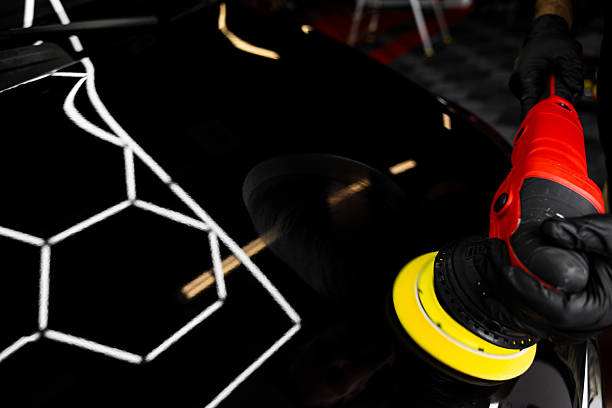
Here’s the thing most people don’t realize. A standard wash or wax doesn’t remove any defects. It fills them temporarily, or just makes the surface slippery and shiny for a few weeks before things look dull again. Paint correction is different. A trained detailer uses a machine polisher with cutting compounds to physically remove a thin layer of your clear coat, leveling out the surface so that scratches, swirl marks, and oxidation simply aren’t there anymore. Gone. Not hidden.
The clear coat on most modern vehicles is somewhere between 50 and 100 microns thick, which isn’t a lot of room to work with. That’s why the process has to be done carefully, by someone who knows what they’re doing. Aggressive correction removes more material and gets better results, but it also leaves less clear coat behind for future work. A good detailer will check your paint thickness before they start and tell you what’s realistically possible. If they don’t, that’s a red flag.
The visual difference after a proper correction can honestly be shocking. Cars that looked flat and tired suddenly look like they just rolled off a showroom floor. That’s not an exaggeration. The science behind it is straightforward: light reflects uniformly off a flat surface, and a scratched or oxidized surface scatters light in all directions, which is what makes paint look dull. Correcting the surface fixes that reflection, and the depth of color comes back.
Cost Comparison: What Are Your Real Options?
Let’s talk money, because that’s usually what this decision comes down to. Paint correction pricing varies based on the size of the vehicle, the condition of the paint, and how many stages of correction are needed. A single-stage polish on a small car might run $200 to $400. A full multi-stage correction on a large SUV with heavy defects could easily hit $800 to $1,500 or more.
Compare that to a full respray. A quality repaint from a reputable body shop in 2026 is going to cost you anywhere from $3,000 on the low end to well over $10,000 for a high-quality job on a larger vehicle. And that’s assuming there’s no bodywork needed. Vinyl wrap sits somewhere in the middle, usually $2,500 to $6,000 for a full vehicle, and it changes the look rather than restoring it. Not the same thing at all. Doing nothing is free, obviously, but oxidation and swirl damage don’t stop on their own. They get worse, and eventually you’re looking at a repaint whether you wanted one or not.
Paint Correction Services in Fresno CA tend to be significantly more affordable than a respray while delivering results that are genuinely impressive on paint that’s still structurally sound. The key word there is “structurally sound.” If your paint is peeling, heavily chipped, or has deep gouges that go through the clear coat into the base coat or primer, correction won’t fix that. That’s where a respray or spot repair makes more sense.
What Paint Correction Can and Cannot Fix
This part matters a lot. Most people overestimate or underestimate what’s possible. Correction works really well on swirl marks from automatic car washes, light scratches that haven’t gone through the clear coat, water spots, oxidation, and that hazy or milky look that develops on older paint. Pretty much anything that lives in the clear coat layer is fair game.
But there are limits. Deep scratches where you can feel the groove with your fingernail have usually gone through the clear coat entirely. Correction won’t fill those in. Rock chips, paint transfer from a parking lot scrape, rust bubbles under the surface, and peeling clear coat are all outside what polishing can address. A good detailer will tell you this upfront. Be a little wary of anyone who promises to fix everything regardless of what you show them.
According to Wikipedia’s overview of automotive paint, modern vehicles use multi-layer paint systems where the clear coat acts as the primary protective and aesthetic layer. That’s exactly why targeting the clear coat with correction makes such a visible difference, and why protecting what’s left of it afterward matters so much.
How It Affects Resale Value
Resale value is one of the strongest arguments for paint correction, especially if you’re planning to sell or trade in within the next year or two. First impressions matter. A lot. Buyers notice paint condition immediately, and a car with dull, swirled paint signals neglect even if the mechanical side is perfect. Correcting the paint before listing can make the difference between a buyer offering full asking price or trying to talk you down $1,000 or more.
Paint Correction Services in Fresno CA are popular for exactly this reason. Pre-sale detailing, done right, can return two or three times its cost in sale price. And if you’re not selling anytime soon, catching oxidation early means you’re protecting the clear coat before it gets thin enough that correction is no longer an option. Waiting too long closes that window.
If you want the longest-lasting protection after correction, a ceramic coating applied on top is the logical next step. J3 Mobile Detail is one option people in the Fresno area use for this kind of work, handling both the correction and the coating application as a package.
When It’s Worth It and When It’s Not
Worth it? Yes, if your car has swirl buildup from years of automatic washes, if you’re prepping for a sale, if you’re restoring a classic and want the paint looking right, or if you just bought a used car that came with neglected paint. Also worth it if you plan to apply a ceramic coating afterward, since correction is basically a requirement before any coating goes on. You can’t seal in defects and expect good results.
Not worth it? Probably not if the paint is peeling, severely chipped, or has rust that needs body shop attention first. Also not ideal if you’re planning to wrap the car anyway, since the wrap will cover the paint regardless. And if the car is a high-mileage beater you’re driving into the ground, the math doesn’t work in correction’s favor.
The honest version is this: for most daily drivers with normal swirl and oxidation damage, a proper Paint Correction in Fresno CA is going to be far cheaper than the alternatives and deliver results that genuinely surprise you.
Frequently Asked Questions
How long does paint correction last?
The correction itself is permanent in the sense that the defects are physically removed. But new swirls and scratches can develop over time, especially if you’re using automatic car washes. Following up with a ceramic coating or quality paint protection film will keep the results looking good much longer.
Can I do paint correction myself at home?
Technically yes, but it’s risky. Machine polishing removes clear coat, and if you apply too much pressure or use the wrong pad and compound combination, you can burn through the clear coat entirely. Most people who try it at home end up with uneven results or, worse, damage that now needs professional repair. It’s one of those jobs where experience really does matter.
How do I know if my car needs one stage or multiple stages?
A detailer will inspect the paint under proper lighting and often with a paint thickness gauge. Light swirling and minor oxidation usually need one stage. Heavier scratches, deeper marring, or severe oxidation typically need two or three stages, with each stage using progressively finer compounds and pads.
Does paint correction remove all scratches?
Not all of them. Scratches that are still within the clear coat layer can be polished out. Scratches that have cut through into the base coat or primer are a different story. Those need touch-up paint or spot repair, not polishing. A good detailer will tell you which is which before any work starts.
Is paint correction worth it on an older car?
Often yes, especially if the paint is original and the clear coat is still intact. Older vehicles with oxidized or hazy paint respond really well to correction. The main thing to check is paint thickness first, since older paint may have already been polished before and have less clear coat left to work with. That’s a conversation to have with your detailer before committing.