

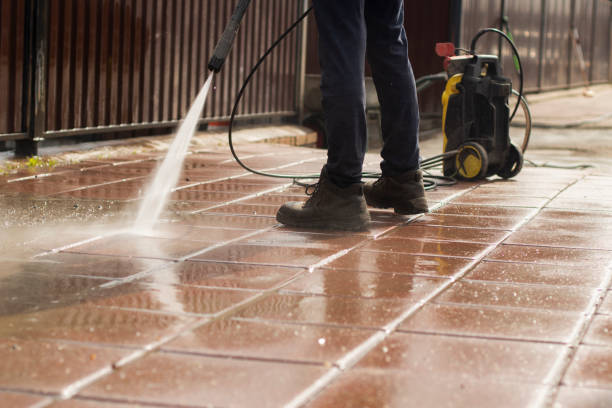
Power washing looks easy. You point a wand at dirty siding, pull the trigger, and watch the grime disappear. But a lot of homeowners have made that same assumption and ended up with stripped wood grain, cracked mortar, or water sitting behind their siding for weeks. If you’re thinking about doing this yourself, or you’ve already given it a shot and something didn’t look right afterward, it’s worth slowing down and going over where things go sideways. Getting help from Power Washing Services in Stevens Point WI is always an option if you’d rather not risk it, but if you want to go the DIY route, these are the five mistakes you really can’t afford to make.
Mistake 1: Using Too Much Pressure on the Wrong Surface
This one causes more damage than anything else. People rent a pressure washer, see that it goes up to 3,500 PSI, and figure more pressure means cleaner results. It doesn’t work that way. Vinyl siding, for instance, is best cleaned somewhere between 1,200 and 1,500 PSI. Wood decking? You’re looking at 500 to 800 PSI, sometimes lower if the wood is older or already soft. Concrete driveways can handle up to 3,000 PSI, but that’s about the ceiling even for tough surfaces.
Go too high on wood and you’ll blast the grain right off. On vinyl, you can crack panels or, worse, force water up behind the siding where it sits against the house wrap and causes mold. Most rental machines don’t label this clearly. So before you start, look up the recommended PSI for whatever surface you’re cleaning and dial it back a bit from there. Starting low is always smarter than starting high.
Mistake 2: Holding the Nozzle Too Close or at a Bad Angle
Distance matters. A lot. Even at a perfectly reasonable pressure setting, holding the nozzle six inches from a wood deck concentrates the force into a tiny spot and gouges right into the surface. You’ll end up with these fuzzy, raised streaks in the wood that are a nightmare to sand out before staining.
The general rule is to keep the nozzle at least 12 to 18 inches from most surfaces. On softer materials, go even further back. Angle matters too. Spraying straight down at 90 degrees into horizontal gaps on siding or decking boards pushes water directly into the joints. You want to spray at a slight downward angle so water runs off the surface rather than forcing itself into any gap it can find. Sound obvious? Plenty of people skip this step and wonder why their deck boards are cupping a week later.
Mistake 3: Using One Nozzle for Everything
Most pressure washers come with a handful of colored nozzle tips. A lot of people grab whichever one is already attached and use it on everything. That’s a problem. The color coding actually tells you the spray angle, and the angle changes everything about how the water hits the surface.
Here’s a quick breakdown of what each tip does:
- 0-degree (red): A pinpoint jet. Strong enough to cut through rust or heavy grease on metal. Should never touch wood, siding, or painted surfaces.
- 15-degree (yellow): Good for concrete and brick, but still aggressive. Use carefully and keep your distance.
- 25-degree (green): The most common all-around tip. Works for decks, siding, and general cleaning at appropriate distances.
- 40-degree (white): A wide, gentle fan. Best for windows, painted surfaces, and anything fragile. Also good for rinsing off detergent.
Matching the tip to the job isn’t complicated once you know what each one does. But grabbing the wrong tip, especially that red 0-degree, on something like painted wood trim can strip it down to bare wood in one pass. Not a great afternoon.
Mistake 4: Skipping Pre-Treatment and Post-Treatment Steps
Power washing alone doesn’t always do the full job. On surfaces with mold, mildew, or heavy algae, you really need a detergent or cleaning solution applied first and given time to sit before you rinse. Skipping that step means you’re just blasting the surface of the stain without breaking it down, and it’ll come back fast.
Post-treatment matters just as much. Rinsing in the wrong direction can push dirty water back into areas you just cleaned. Always rinse downward, working from top to bottom on vertical surfaces. And don’t forget about what’s nearby. Plants and shrubs can get burned by detergent runoff if you don’t wet them down first and rinse them off afterward. Same goes for patio furniture, outdoor lighting, and any electrical outlets or fixtures near the work area. This is the prep work people skip because it feels unnecessary. It isn’t.
If you’re dealing with Power Washing in Stevens Point WI and the surface has heavy staining from iron or tannins, a specialty pre-treatment cleaner made for that stain type will do more in 10 minutes than brute pressure ever could. Worth picking up before you start.
Mistake 5: Pressure Washing Surfaces That Can’t Handle It
Some surfaces should not be hit with high-pressure water. Period. Roof shingles are a big one. Asphalt shingles have a granule coating that protects them from UV damage, and a pressure washer strips those granules right off, cutting years off your roof’s life. If you’ve got moss or algae on the roof, a low-pressure rinse with a proper roof cleaning solution is the right move, not blasting it with a 2,500 PSI stream.
Old mortar joints between brick or stone are another surface that gets destroyed by high pressure. If the mortar is already soft or crumbling, water at high PSI will blow it out entirely, and repointing brickwork is not cheap. Painted wood trim is in the same category. The paint acts as a seal, and once you strip it, moisture gets into the wood fast. For these surfaces, a soft wash approach, lower pressure combined with the right cleaning solution, does the job without the damage.
If you’re unsure whether a surface can handle pressure washing, that’s honestly a good time to call someone who knows. CM Pro Painting handles this kind of work regularly and can tell you pretty quickly what a surface needs before any damage gets done.
For a broader look at how water pressure and surface materials interact, the Wikipedia article on pressure washing covers some useful background on equipment types and common applications.
The second time you’re looking at Power Washing Services in Stevens Point WI options, it’s usually because the first attempt didn’t go as planned. That’s more common than people admit. Knowing these five mistakes before you start is a much better situation than learning them after the fact.
Power Washing in Stevens Point WI is genuinely something most homeowners can handle on the right surfaces with the right setup. The key is slowing down, using the correct pressure and tip for each material, doing the prep work, and knowing which surfaces to leave alone entirely.
Frequently Asked Questions
What PSI should I use on a wood deck?
Keep it between 500 and 800 PSI for most wood decks. If the wood is older or already showing wear, stay closer to the low end. Higher pressure will raise the grain and leave fuzzy streaks that are hard to fix before you stain or seal.
Can I power wash vinyl siding myself?
Yes, but keep the pressure between 1,200 and 1,500 PSI and spray at a downward angle. Never spray up under the panels. Water forced behind siding can cause mold behind your walls, which is a much bigger problem than dirty siding.
Is it safe to power wash a roof?
Not with high pressure. Asphalt shingles lose their protective granules when hit with a strong stream, and that shortens the life of the roof noticeably. Use a low-pressure rinse and a roof-safe cleaning solution instead. Some pros call this soft washing.
What’s the difference between the nozzle tips?
The color tells you the spray angle. Red is 0 degrees (a pinpoint jet, very aggressive), yellow is 15 degrees, green is 25 degrees and the most common general-purpose tip, and white is 40 degrees for gentle rinsing. Always match the tip to the surface you’re cleaning.
Do I need to do anything to protect my plants before power washing?
Yes, definitely. Wet down any plants, shrubs, or grass near the work area before you start and rinse them off again after. Detergent runoff can burn or kill plants pretty quickly if they’re not rinsed out. Moving any patio furniture and covering outdoor electrical fixtures is also a smart step before you begin.