If you’ve ever left a workout with a tickle in your throat, you’ve asked this, too. Gyms bring people, sweat, and shared equipment—great for results, risky for germs. A cleaner gym lowers that risk because fewer pathogens land on your hands, face, and water bottle. The question is how much “clean” matters—and what you can do about it today. If you’re weighing DIY routines versus gym & recreation cleaning services in NY, here’s a straightforward, friendly blog that focuses on what truly keeps you healthy.
What “Clean” Really Means in a Gym
We toss around “clean” like it’s one thing. It isn’t.
- Cleaning removes dirt and sweat you can see.
- Sanitizing reduces germs to safer levels.
- Disinfecting kills most germs on surfaces when used correctly.
Because sweat and chalk hide microbes, you need all three at the correct times. Cleaning first also removes gunk, allowing disinfectants to reach the surface more effectively. However, products only work if they stay wet for the labeled “dwell time” (often 1–10 minutes). Therefore, quick spray-and-wipe habits fall short. When your gym sets clear routines—and trains staff on dwell time—illness risk drops in a real, practical way.
Quick Comparison
| Approach | Goal | When to use |
| Cleaning | Remove sweat/dirt | Between sets or sessions |
| Sanitizing | Lower germ count | Low-risk areas (off-peak) |
| Disinfecting | Kill most pathogens | High-touch zones daily |
Do Cleaner Gyms Really Cut Sick Days?
Short answer: yes—when cleaning is consistent and targeted. Germs spread by touch, then face contact. Because equipment is shared on a minute-to-minute basis, high-touch points become “germ highways.” Disinfecting those spots at the right frequency interrupts that chain. Meanwhile, better ventilation and hand hygiene add another layer of protection. Additionally, organized routines consistently outperform occasional deep cleans. If your facility or provider follows a written plan—like many gym & recreation cleaning services in NY do—the odds of post-workout sniffles go down, especially during cold and flu season.
High-Touch Hotspots Most People Miss
We all think of dumbbells and treadmills. However, the hidden culprits are often smaller and stickier.
- Functional tools: kettlebell handles, medicine balls, resistance bands
- Machine details: adjustment pins, touchscreens, start/stop buttons
- Shared amenities: water fountains, locker dials, sink levers, soap pumps
- Class gear: yoga blocks, foam rollers, mic headsets
- Soft surfaces: bench upholstery seams, strap loops, jump ropes
Because these areas rotate between dozens of hands, they require frequent, short, and correct disinfection—especially during peak hours. Even so, members can help by wiping before and after use. Staff should restock wipes and hand sanitizer so that the “good habit” becomes a habit that is easy to maintain.
How Often Should Gyms Clean What?
Frequency matters as much as product choice. Instead of a vague “we clean nightly,” aim for schedules that match traffic.
Daily (Multiple Times in Peak Hours):
- Cardio consoles, handles, buttons
- Strength grips, benches, mats
- Locker room fixtures and door pulls
Daily (Open/Close):
- Floors and mirrors
- Waste stations and refill points
- Light switches, railings
Weekly Or Biweekly:
- Deep-clean corners, bases, vents
- Descale showers; scrub grout
Because standards vary, many facilities partner with gym & recreation cleaning services in NY for consistent coverage, staff training, and supply management. Therefore, you get predictable cleanliness—without juggling product orders or shift gaps.
Products That Work Without the Sting
Strong doesn’t have to smell harsh. Look for EPA-registered disinfectants specifically designed for use in fitness environments. Because dwell time is crucial, choose ready-to-use wipes or sprays with clear labels, then train staff to keep surfaces visibly wet for the whole time. Also, match the product to the material: quats for many hard surfaces, hydrogen-peroxide blends for speed and broad coverage, and neutral cleaners for floors and mirrors. Meanwhile, avoid bleach on corrosion-prone metals and electronics. An innovative kit keeps it simple:
- One everyday disinfectant for high-touch zones
- A gentle cleaner for screens and mirrors
- A neutral floor cleaner with microfiber pads
- Color-coded cloths to prevent cross-contamination
A One-Minute Member Routine That Helps
You can lower your own risk without slowing your workout.
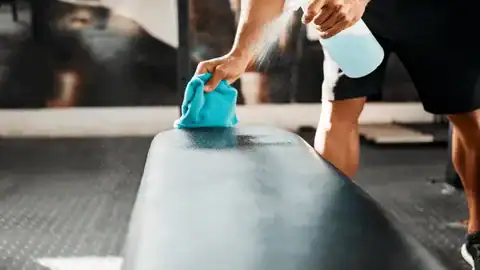
- Before use, wipe down handles, seats, and buttons. Let them air-dry.
- Hands: Use sanitizer after each station; towel stays for sweat, not faces.
- Face policy: Don’t touch your eyes, nose, or mouth during sets.
- Hydration gear: Additionally, keep bottle lids closed when not in use.
- After use, wipe down the area again, especially the grips and seat adjustments.
Because these moves become automatic, you’ll touch your face less, share fewer germs, and feel better tomorrow. Meanwhile, management sees cleaner habits, so they’re more likely to stock supplies consistently.
Signs Your Provider is Doing it Right
A good routine doesn’t hide—it shows. When you walk in, scan for these:
- Visible schedule: A posted checklist with timestamps and initials
- Stocked stations: Wipes, sanitizer, spare rolls, and labeled sprays
- Smart flow: Staff moving in zones, not randomly
- Material care: No cracked vinyl, gummy residues, or rusted plates
- Air cues: Fresh, not perfumery; vents dust-free
Because operations can slip during staff changes, reliable partners matter. Many gym & recreation cleaning services in NY provide logs, supervisor checks, and periodic deep cleans that backstop daily routines. Therefore, standards don’t hinge on one superstar employee—they’re baked into the process.
Make A Cleaning Plan That Actually Sticks
Policies are significant; habits are better. Start with a short, written standard that fits your space and traffic, then measure it.
- Set zones: Cardio, strength, classes, amenities, restrooms
- Assign times: Peak touch-ups, open/close tasks, weekly deep dives
- Train: Also, show how to keep surfaces wet for dwell time
- Track results: Use quick audits; fix gaps fast
- Communicate: Friendly signs for members; restock cues for staff
Because time and staffing wobble, schedule professional support to cover peaks and deep work. Partnering with gym & recreation cleaning services in NY keeps supplies, training, and compliance aligned—so your team can focus on members and programming.
Bottom Line and Next Steps
Cleaner gyms won’t make you invincible, but they do cut risk in a real, daily way—especially when cleaning is targeted, frequent, and done with the correct dwell times. To reduce the number of germs on the things you touch, start by addressing hotspots and habits, then supplement with consistent professional help. Moreover, if you manage a facility or care about staying healthy between sessions, use the checklists here this week. And if you’re looking for steady, low-drama support in New York, reach out to Reliable Janitorial for a plan that suits your traffic and budget.